Friday, 12 June 2015

Our Governance Algorithms


by Nick CharneyRSS / cpsrenewalFacebook / cpsrenewalLinkedIn / Nick Charneytwitter / nickcharneygovloop / nickcharneyGoogle+ / nickcharney

I spent a couple of days this week attending the Marcom Forum in Ottawa. I've been on the conference's advisory board for almost as long as I've been a public servant and its always a nice change of pace to spend a couple of days locked in a conference room full of marketing and communications people. It gives me the opportunity to apply a totally different lens on my work and is a healthy signal check with respect to how different vocations prioritize strategies, tactics and ultimately, outcomes.

One of the things that stuck out for me from the Fab Dolan's (Google) keynote address was the idea that the pace of technological growth is no longer linear but exponential. That single purpose technology is now being widely diffused and applied to other areas (e.g. IBM's Watson to Health Care) and that consumers (and thus citizens) are increasingly interested in immersive experiences rather than static ones. In many ways this isn't necessarily a new insight but I found being reminded of it in a different context extremely helpful.


The other thing Dolan mentioned — the thing I want to reflect on today — was the idea that ethnography generates insights too slowly for today's marketplace whereas data allows you to test all of your hypotheses immediately and at a fraction of the cost. Dolan went on to illustrate his point by talking about machine learning in the context of video games and explain its marketing corollary dynamic creative.

Dynamic creative is a fancy way of saying continuous and concurrent A/B testing. Think 'nudge' not in the policy innovation sense but rather in the classic marketing sense, generating conversions. Essentially dynamic creative allows marketers to perpetually test and improve their marketing algorithm in real time using the behavioural data people generate when using the web.

But here's the rub.

Yes our current institutional array – our governance algorithm – is under pressure because in many ways it remains linear when everything else around it is becoming exponential, but its also the result of hundreds of years of the evolution of our thinking. To be perfectly honest, I'm not sure there's a natural corollary to the world of public policy.

What does dynamic governance – or cognitive government (See: Open Gov, Values, and the Social Contract) – actually look like?

Where's the data that governments can tap into, use to test hypotheses against and lever to improve its governance algorithms in real time?

And, more importantly, even if we could do such a thing, should we?

Food for thought.

Wednesday, 10 June 2015

The Future of Online Communities


by Kent AitkenRSS / cpsrenewalFacebook / cpsrenewalLinkedIn / Kent Aitkentwitter / kentdaitkengovloop / KentAitken


Within online communities, there are different types of users with different levels of engagement. These might be called "power users," "contributors," and "lurkers," and this tends to apply to everything from Wikipedia to political discussion forums to Amazon reviews.

However, within these levels of engagement (measured in edits, comments, visits, or whatever), there are also different motivations, and this should have an impact on how we consider digital communities, crowdsourcing, or engagement.

A rough divide:


Strategists

This group is largely agnostic about engagement methods. Their motivation centers on the recognition that a given community represents a means of advancing their goal: connecting to an audience, or getting the ear of key players. Strategists could be those building goodwill with communities as inbound marketing, lobbyists looking for influence avenues, or activists looking to have their voices heard.


Subject Matter Enthusiasts

These are the people for whom the community ostensibly exists. They are part of a give and take of knowledge, learning, and contributing. The health of the community strengthens their field and enables networks and relationships. There may be a degree of strategy among this group, but it's secondary to enthusiasm about the subject matter.

The Collaboration Community

It is unlikely that those Wikipedians with 100,000+ edits are either subject matter experts or economically rational time maximizers. They are instead part of the Collaboration Community, those who contribute based partially on subject matter interest but primarily on community interest (if you’ve never watched The Internet is my Religion, please do so). That is, they are interested in the network itself and want it to succeed. This happens on the Government of Canada's internal networks, as well. Regardless of the topic, alongside the subject matter experts there's always a noticeable contingent of "usual suspects".

Novelty Explorers

Novelty Explorers are the group that engages because the opportunity to engage is new and exciting. A chance to help scientists make discoveries, a way to see their name and contribution immortalized on the internet, or an opportunity to weigh in on the activities of their government. This is the logic of "Holy ___ — [large organization that I read about in the news] wants my input!"

The Attention Economy

Novelty Explorers are a particularly fascinating group, because government is increasingly asking for the time and attention of citizens at the same time everyone else is: citizen science, crowdsourcing campaigns, crowdfunding campaigns, TripAdvisor, Yelp, as well as all of the discussion forums and Usenet groups that came with the early internet days.

But now everyone wants people’s input, and asking for it isn't special anymore. This fact demands recognition and a change in tactics. People are contributing at their whim, and the novelty will wear off. Not all explorers will turn into collaborators, strategists, or experts.

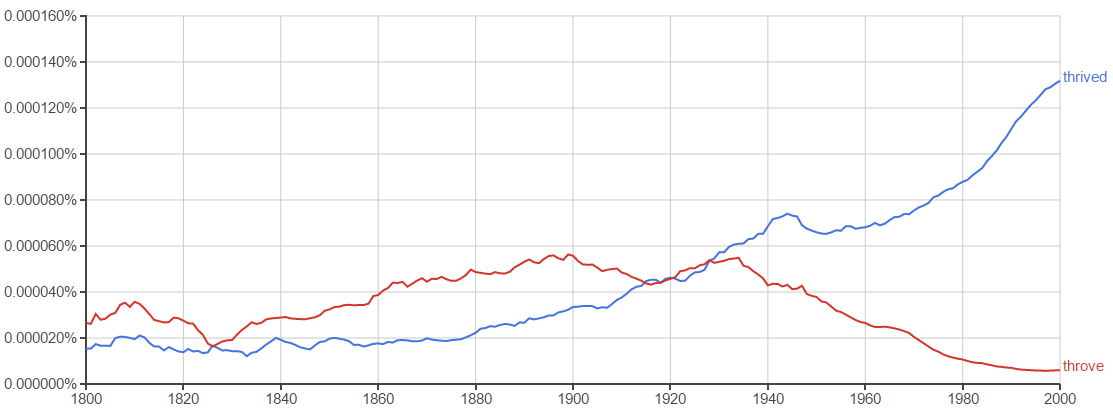
So far online communities have thrived* through experimentation and a sheer volume of potential collaborators. But as demand increases and novelty doesn’t, those asking for the time, attention, and effort of online communities will need to up the ante in the years to come**. The question will move from “How can we get people to engage?” to “Who actually needs to engage, and why would they, in particular?” 


*Relative frequency of “thrived” versus “throve” since 1800:


**Blaise pointed to the concept of Evaporative Cooling in online communities before, an interesting read about how communities inexorably become less valuable to precisely those people that provide the most value to them. Which raises interesting questions about the value of such communities.

Friday, 5 June 2015

Building Trust and Transparency Through Failure


by Melissa TullioRSS / cpsrenewalFacebook / cpsrenewaltwitter / creativegov

A couple of weeks ago, I attended a communications conference. The theme was "Think, Think, Nudge, Nudge": how we might start applying some behavioural insights techniques in our work to deliver more impact/meaning in our messaging to audiences (not to mention using a more evidence-based approach to do things). Ontario's own behavioural insights team was brought in to present how they've used randomized control trials to improve outcomes for various Ontario ministries, and speakers from ideas42 provided a couple of hands on workshops for us to learn some of the methods.

The keynote speaker was Michael I. Norton from Harvard Business School, who delivered an amusing and thought provoking talk that gave loads of examples illustrating how people react in the randomized control trials he's run. An example that really stuck with me was the results from a prototype of Boston's Citizens Connect app. It's kind of a "fix your street" for Boston, where citizens can report potholes, graffiti, and other broken things in the city. The data is uploaded to a map, which shows the status of each of the submissions - the prototype had red flags for open tickets, yellow for recently opened, and blue for closed tickets.

The test worked like this. They showed three versions of the app to people. The first didn't provide an illustration showing that the city was taking action on the open tickets - it was probably just a form for people to submit problems to the city. The second showed only the closed tickets, which cast the city in a positive light (but wasn't necessarily the most honest). The third showed all the open tickets and closed tickets (the open tickets greatly outnumbered the closed tickets, which may leave a negative impression of the city). A key insight that came out of the test was that even the map showing all of the open, red tickets was received more positively by people than the version that showed nothing at all.

What's going on here?

Michael's research on consumer behaviour shows that people like to see the work. Transparency in the processes that we're using to deliver a service builds credibility and trust in the institutions we rely on. As a consumer, this seems pretty intuitive to me. It feels a lot better seeing the person behind the glass preparing the burger with fresh ingredients than to order it through an intercom and pick it up a few minutes later like some human vending machine.

In a previous blog post (See: Open Gov, Values and the Social Contract), I talked about values, and mentioned how we can't say, as government, that we're open, if we don't then follow through and act in an open way. Ryan left a really interesting comment on that post: "not everything can (or dare I say, should) be 100% open 100% of the time." I agree with this; transparency isn't about revealing everything, but revealing what we can in the context of protecting citizens' privacy (we're not a burger joint). And, as behavioural insights evidence shows us, it's also about revealing, when we're able to reveal things, both the bad and the good outcomes of the things we're trying (e.g., the map showing the red flags as well as the blue ones).

Vulnerability as a Value

This all left me thinking about a value we're not so great at demonstrating in government: vulnerability. I'm willing to bet that every public servant working inside government today has felt risk aversion from colleagues or superiors in some form. We're afraid to fail, and even more afraid to show that we've failed. We cringe at the thought of ending up as a headline in the morning paper because of a mistake we made (I literally just got goosebumps thinking about this).

But what if the spaces we built inside government supported experimentation? Kent's recent post proposes that we're already experimenting, and I think it's true. The part we're missing is transparency - showing people that we don't have all the answers, and we need their help to figure stuff out.

What if we let users/citizens into the experiments? What if we had spaces to try stuff out before launching programs/policies that might fail anyway, regardless of how much thought we've put into them to avoid failure? And what if one of the guiding values for playing in those spaces were vulnerability - demonstrating to ourselves, and people who rely on us for services, that failure is OK, as long as we learn and build something better from it?

Is it reasonable to believe that transparently demonstrating to people that we're good at failure can build trust between us and the people we deliver services to? And if you agree, how might we move the culture towards embracing vulnerability as a value?

Wednesday, 3 June 2015

You're Experimenting Right Now


by Kent AitkenRSS / cpsrenewalFacebook / cpsrenewalLinkedIn / Kent Aitkentwitter / kentdaitkengovloop / KentAitken


You may be familiar with the trolley problem in ethics:

There is a runaway trolley barreling down the railway tracks. Ahead, on the tracks, there are five people tied up and unable to move. The trolley is headed straight for them. You are standing some distance off in the train yard, next to a lever. If you pull this lever, the trolley will switch to a different set of tracks. However, you notice that there is one person on the side track. You have two options: (1) Do nothing, and the trolley kills the five people on the main track. (2) Pull the lever, diverting the trolley onto the side track where it will kill one person. Which is the correct choice?

The latter option is better from a purely utilitarian perspective, but many people lean towards the first option, which absolves them of participation or responsibility in the outcome.

The current public administration zeitgeist would more likely point to behavioural economics to prove the power of defaults to provide a level of comfort and confidence in people’s decisions (see: How Nudges Work for Government). But the point stands: we are unduly comfortable with the status quo, and we wrongly absolve ourselves of culpability for outcomes generated through the status quo. In the trolley problem, doing nothing is a big decision*.


Duty and Responsibility

Let's say you're debating a pivot in your career. You've been working in a field for a few years, and you're considering trying something new. It could just be a different job within your organization, or it could be throwing everything out the window, including yourself, and taking a leap of faith. Everything along that spectrum comes with uncertainty, discomfort, and perhaps a degree of fear.

Or, let's say you're an politician debating a policy change: it could be a minor adjustment or something major like mandatory voting or a guaranteed basic income, both of which have been proposed in Canada lately. It's not the sort of thing you can pilot in a vacuum; you have to change the way things things work to gauge how people react. Like the career pivot, it's  uncertain, uncomfortable, and scary.

Who knows how such experiments will work out? Will they be worth the risk? It's impossible to say with 100% certainty, which is the nature of experiments.

It’s tempting to think that those changes are experiments, whereas the course we are on is not. But the status quo is not a valueless, neutral starting point. It’s an experiment. It represents a plethora of design decisions, all of which influence how people behave and make decisions. And you are — we all are — complicit. As Richard Thaler, co-author of Nudge has put it, “There’s no avoiding nudging. Like in a cafeteria: You have to arrange the food somehow. You can’t arrange it at random. That would be a chaotic cafeteria.”

You’re Experimenting Right Now

You've never gone through a career on your current track before. No one ever has, in today's particular environment. Are you in digital media, for instance? Exactly zero people ever have put in a 30-year career in that field.

Likewise for policy. Canada has never entered the 21st century before, our policies have never stood up in the economic, demographic, or technological context they're about to face.

You're experimenting right now. We all are. And we have to weigh the costs and benefits of both the changes we’re considering and the track we’re already on.

* If you find yourself finding holes and rationalizations, Michael Sandel will cure that in his amazing lecture on ethics.

Monday, 1 June 2015

Impossible Conversations: The Utopia of Rules: On Technology, Stupidity and the Secret Joys of Bureaucracy


Kent AitkenRSS / cpsrenewalFacebook / cpsrenewalLinkedIn / Kent Aitkentwitter / kentdaitkengovloop / KentAitken


“Well, that’s the last bureaucrat hung with the guts of the last priest!” “Let’s all sing!” - title page comic

“Nightmare people shape our culture.” - Amazon.com review

Bureaucracy gets a bad rap, and the above sentiments are only a scant sampling of the charges leveled in its direction.  But critiques of bureaucracy often come in a knee-jerk format (e.g., “What idiot thought it’d be a good idea to spend six months ripping up an intersection to put in a roundabout?”) that tends to dissolve upon investigation or reflection. David Graeber went far, far deeper down the rabbit hole.

The Utopia of Rules is a sprawling series of essays on the nature of bureaucracy, its origins, and why people secretly like it - at least, why the people behind it like it:

  1. Dead Zones of the Imagination: an Essay on Structural Stupidity
  2. Of Flying Cars and the Declining Rate of Profit
  3. The Utopia of Rules, or Why We Really Love Bureaucracy After All

Graeber framed his book as an effort to start a conversation about whether or not bureaucracy (in its current forms) is an imperative in our world, which is fair. Much food for thought, few resounding conclusions or paths forward. And to reiterate: sprawling. Graeber will leave you hanging for a good thirty pages sometimes before you even get a sense of the point he’s driving towards. 


Nick CharneyRSS / cpsrenewalFacebook / cpsrenewalLinkedIn / Nick Charneytwitter / nickcharneygovloop / nickcharneyGoogle+ / nickcharney


There’s a certain irony in Kent’s concluding notion that Graeber’s work is sprawling and leaves you hanging for extended periods of time before you get a sense of the point he’s trying to make … It kind of makes you wonder if his critique is intentionally analogous to that which he is critiquing. Regardless of whether it was by design or by neglect the result was the same, the number of pages I dog-eared declined dramatically the further into the book I read. 

That said, if you want some zingers about the bureaucracy, Graeber is your man: 

“The most  profound legacy of the dominance of bureaucratic forms of organization over the last two hundred years is that it has made this intuitive division between rational, technical means and the ultimately irrational ends to which they are put seem like common sense.” (p.40)

Again, like Kent said, zingers yes, solutions path, not so much and as a result, the book just didn’t live up to my expectations.


Kent AitkenRSS / cpsrenewalFacebook / cpsrenewalLinkedIn / Kent Aitkentwitter / kentdaitkengovloop / KentAitken

Unlike The Black Swan, there's no way to quickly sum up the point or the key takeaways on this one. I was with Graeber through the introduction, calling for an investigation into the nature of bureaucracy. However, he followed that lead with a dive into interesting but highly abstract possible elements of bureaucracy — bureaucracy as the threat of violence, or bureaucracy as the elimination of the possibility for human play and imagination — which I don't see as a good starting point for most people who'd need to be a part of that investigation.